
Wilmington, NC · Services
IASTM in Wilmington.
Instrument-assisted soft tissue work that finds restrictions a hand alone can miss and treats them precisely: a tool inside a cause-first plan with a Doctor of Physical Therapy, never a treatment on its own.
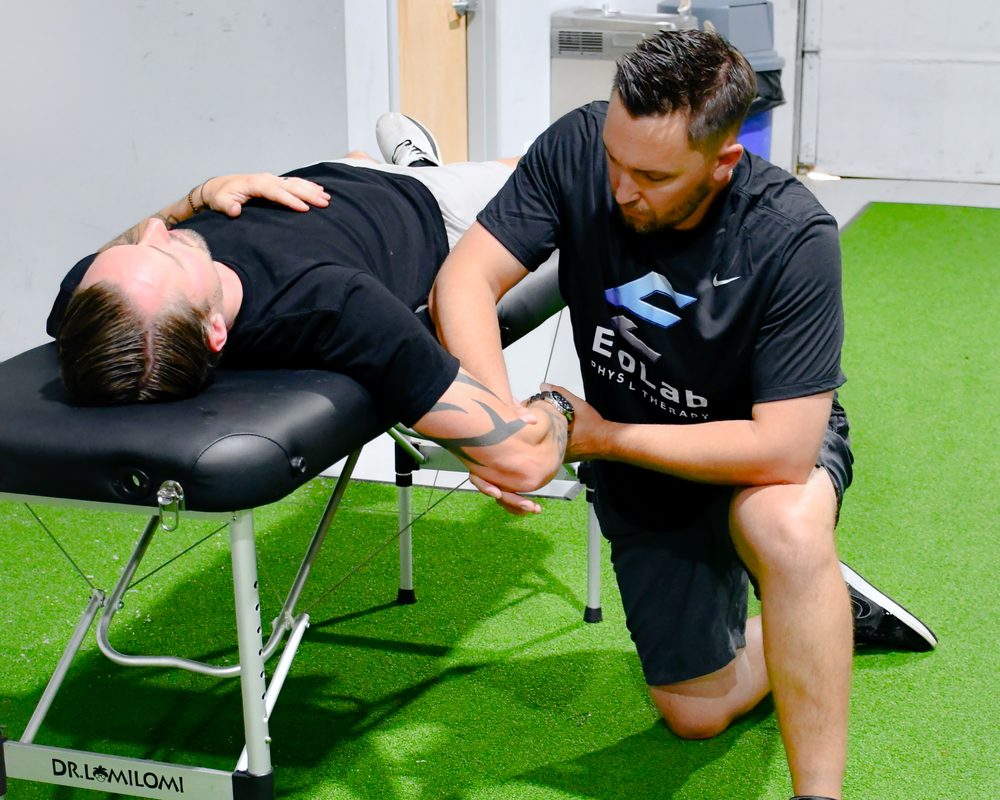
What is IASTM in Wilmington?
Instrument-Assisted Soft Tissue Mobilization, IASTM, uses a smooth-edged handheld tool run along the skin over a muscle or tendon to find scar tissue, adhesions, and fascial restrictions. The instrument transmits a subtle vibration or catch back through the provider’s hand at the exact spot a restriction sits, which can be easier to pinpoint through a tool than through fingers alone, especially over smaller or deeper structures.
Like every hands-on tool here, it shows up inside a cause-first evaluation and a plan built through the four named phases, Pain, Prime, Perform, and Prevent. It tends to earn its place in Pain and Prime, breaking up restrictions that are blocking the mobility work that follows. Treating the restriction is the setup. Rebuilding strength and movement around it is what actually keeps the problem from coming back.
Every session is performed by a Doctor of Physical Therapy, as one tool inside your broader plan, not a service you book on repeat instead of doing the rest of the work.
Calm it down.
Hands-on treatment begins at the first visit. You leave understanding what’s actually going on, and you feel a difference early.
Restore what’s stuck.
Targeted mobility work for the joints and tissue actually holding you back, dosed to your body, not a printed sheet.
Build strength you trust.
Progressive load against standards you have to clear before moving on. Confidence, here, is a training effect.
Make it stay fixed.
Testing before you’re cleared, then a keep-it-gone program sized to your real week. Then we graduate you.
What conditions does IASTM treat?
IASTM tends to get called in where scar tissue or fascial restriction is limiting motion or irritating a tendon. A sample of what it commonly supports:
Elbow & wrist pain ⟶
Forearm and elbow tendon restrictions common to throwing, lifting, and repetitive grip work.
02Foot & ankle pain ⟶
Plantar fascia and Achilles restrictions that resist stretching alone.
03Knee pain ⟶
IT band and quad tendon restrictions contributing to anterior knee pain.
04Shoulder pain ⟶
Rotator cuff and lat scar tissue built up from overhead motion, throwing included.
Scar tissue and fascial restrictions tend to build slowly, often after an old injury that technically healed but left the surrounding tissue stiffer than before. Finding and treating it precisely, inside the plan that treats the actual cause, is usually faster than working around it indefinitely.
What does an IASTM session look like?
IASTM is scheduled as part of a regular visit, not a separate appointment. Your Doctor of Physical Therapy applies a small amount of lubricant to the skin and runs the tool over the target area in short, specific passes, using the feedback through the instrument to locate and work each restriction individually.
Most patients feel a scraping or dragging sensation that can be uncomfortable over a genuinely restricted spot, then a noticeable change in how the area moves afterward. Mild redness at the treated area is common and typically fades within hours. The same visit usually continues into mobility or strength work while the tissue is primed to move, because the goal is to open a window, not close the file.
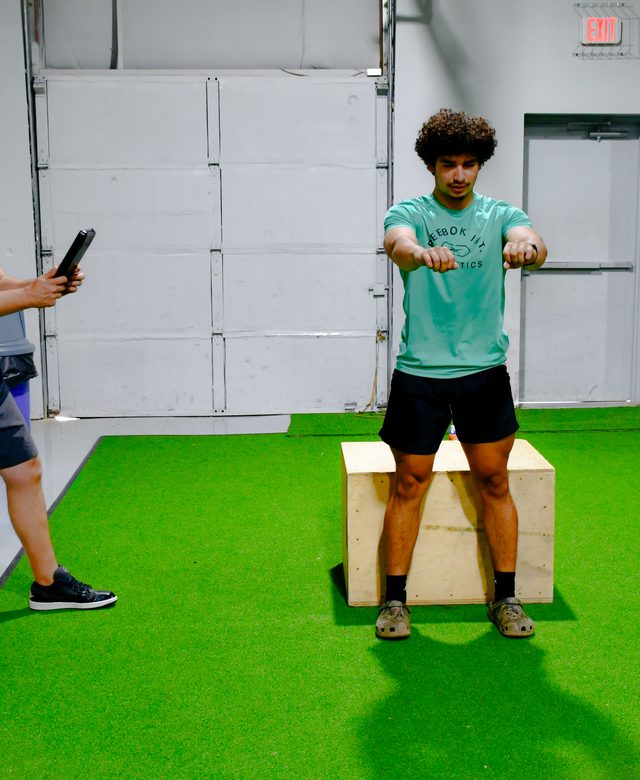
Who this is for, and who it isn’t.
IASTM tends to fit patients whose evaluation turns up scar tissue or a fascial restriction that’s specific enough to benefit from precise instrument work, often an old injury, a tendon under repetitive stress, or a throwing arm carrying years of accumulated wear. It’s a common fit for baseball and softball players managing the demands of overhead throwing, and just as useful for anyone with a similar repetitive-motion restriction.
It’s most useful as one part of an existing plan, not a reason to book on its own. If your evaluation finds a restriction that fits, this is the kind of tool that gets raised at that visit.
It’s not appropriate over acute fractures, active infection, certain skin conditions, or a bleeding disorder your provider screens for before ever running the tool over the area. That screening happens at your evaluation, before anything is scheduled.
Good fit
- Scar tissue or a fascial restriction found at evaluation
- Repetitive-motion wear, throwing arms included
- Part of an existing plan, not a first appointment on its own
- Willing to raise it at your evaluation
Not the right fit
- Acute fracture at the target site
- Active infection or certain skin conditions
- Bleeding disorders (screened at evaluation)
Physical Therapy ⟶
The evaluation and plan it’s built to serve.
02Return to Sport ⟶
Where IASTM often shows up for a throwing arm working back toward clearance.
It’s a tool inside the plan, never a standalone treatment.
“I’d had the same forearm tightness for years and assumed it was just part of throwing. The tool found a spot my own stretching never touched, and my grip finally stopped feeling like it was fighting itself.”
Questions, answered plainly.
Instrument-Assisted Soft Tissue Mobilization. It uses a handheld metal or composite tool, run along the skin over a muscle or tendon, to find and treat restrictions that can be harder to isolate with a hand alone. The tool doesn’t do anything a trained hand can’t theoretically feel, it just makes small, specific restrictions easier to locate and treat precisely.
Most patients feel a scraping or dragging sensation, occasionally sharp over a genuinely restricted spot, but it shouldn’t be sharply painful throughout. Mild redness is common and fades within hours. True bruising is possible over a more aggressive pass but isn’t the goal, and your provider adjusts pressure to what the tissue needs, not a set intensity.
Graston is one specific branded version of instrument-assisted soft tissue work, and there are several others. The underlying idea, using a tool to detect and treat soft tissue restrictions, is shared across all of them. What matters more than the brand of tool is the evaluation behind it: finding the actual restriction before treating it.
Here, no. IASTM is scheduled inside an existing physical therapy plan, following a cause-first evaluation that confirms it’s the right tool for what’s actually restricted. It works best paired with the mobility and strength work that addresses why the tissue tightened in the first place.
Start with the evaluation that finds the restriction.
Put it in writing.
Five short questions. A real person calls you back, usually within two business hours, with times that fit your week.
The people who end up filling this out are rarely in the worst pain of their life. They’re just done working around it, done picking the errand that doesn’t require the stairs. If that’s the stage you’re at, this is the part where you stop researching and start.
Consider it filed.
A real person will call you back, usually within two business hours, with appointment times that fit your week. Keep your phone nearby.
Can’t wait? Call (910) 218-8108 ⟶Easy to find. Easy to park.
In the neighborhood, with parking by the door. Come see the place before you commit, if you like.
The clinic · EvoLab Physical Therapy
Get Directions ⟶Opens in Google Maps