
Wilmington, NC · Services
Manual therapy in Wilmington.
Hands-on joint and soft tissue work, built into your evaluation from the first visit: the foundation a cause-first plan with a Doctor of Physical Therapy is built on, not a separate add-on.
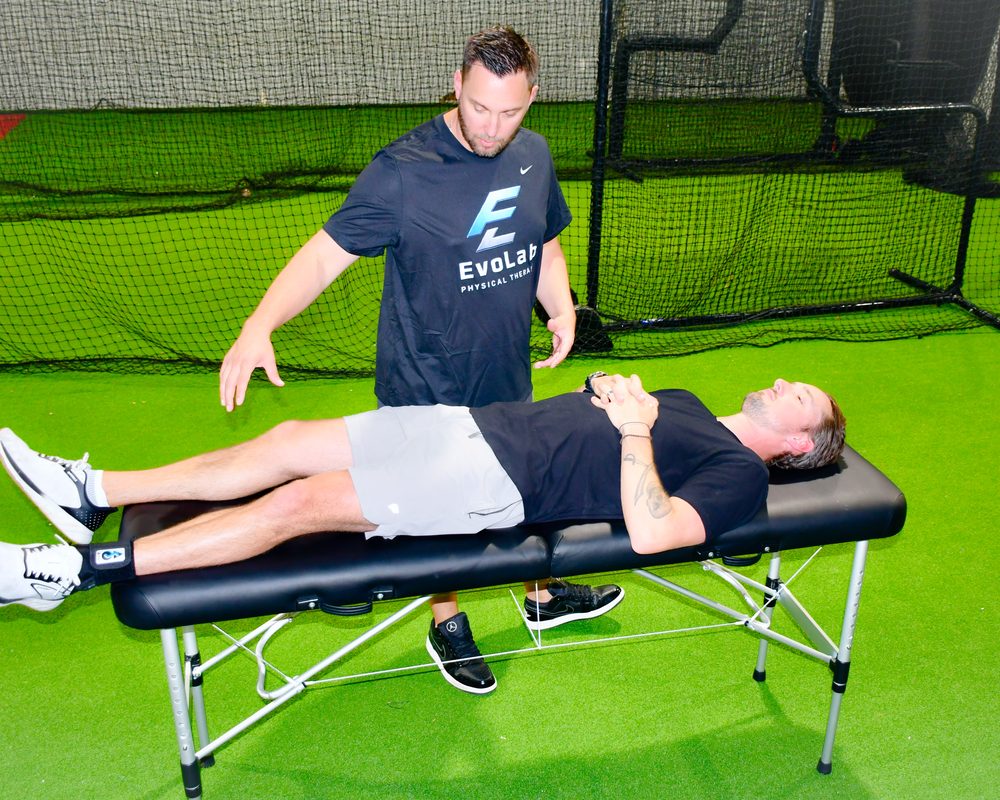
What is manual therapy in Wilmington?
Manual therapy is the umbrella term for hands-on treatment: a provider’s hands moving a joint through its range, working restricted soft tissue, or guiding a stretch beyond what you could do alone. It’s not one specific technique, it’s the whole category of skills that separates hands-on care from a printed exercise sheet handed to you at the front desk.
Here, it’s not an add-on you schedule separately, it’s built into the evaluation and every visit that follows. A cause-first evaluation finds what’s actually restricted, and your Doctor of Physical Therapy applies whatever manual technique fits, joint mobilization, soft tissue work, guided stretching, as part of the same hour. That hands-on work runs through all four phases, Pain, Prime, Perform, and Prevent, though it tends to carry the most weight early, in Pain and Prime.
More specific tools like dry needling, cupping, and IASTM sit inside this same category when your plan calls for them. Manual therapy is the foundation those tools get added to, not something separate from it.
Calm it down.
Hands-on treatment begins at the first visit. You leave understanding what’s actually going on, and you feel a difference early.
Restore what’s stuck.
Targeted mobility work for the joints and tissue actually holding you back, dosed to your body, not a printed sheet.
Build strength you trust.
Progressive load against standards you have to clear before moving on. Confidence, here, is a training effect.
Make it stay fixed.
Testing before you’re cleared, then a keep-it-gone program sized to your real week. Then we graduate you.
What conditions does manual therapy treat?
Manual therapy shows up in nearly every plan here, in some form. A sample of what it commonly supports:
Low back pain ⟶
Stiff spinal joints and guarded soft tissue eased through hands-on mobilization.
02Neck pain & headaches ⟶
Restricted neck joints and tight upper traps addressed by hand.
03Shoulder pain ⟶
Joint mobilization to restore the range a stiff or guarded shoulder has lost.
04Hip pain ⟶
Hands-on work for a hip that’s lost motion after guarding pain for a while.
Hands-on evaluation finds what a scan often can’t: how a joint actually moves and where it’s guarding. That’s why manual therapy sits at the center of almost every plan here, not as an occasional add-on.
What does manual therapy look like in a session?
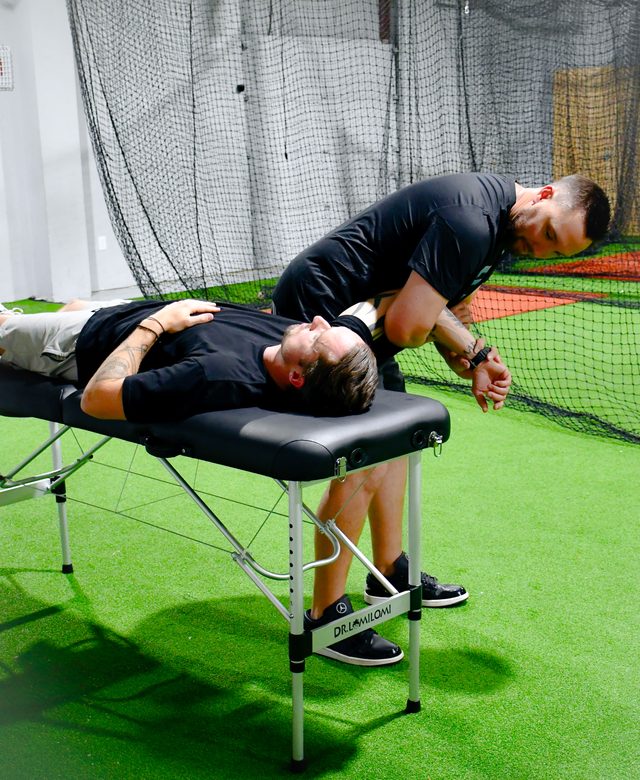
Manual therapy is not a separate appointment, it’s woven through the visit from the moment your Doctor of Physical Therapy starts moving the joint or tissue in question. Depending on what the evaluation finds, that might mean gentle rhythmic joint mobilization, deeper soft tissue work, guided stretching past where you could take it alone, or a combination worked in sequence.
Most patients feel pressure, stretch, or movement they wouldn’t be able to produce on their own, and a noticeable change in range or ease right afterward. That hands-on work typically opens into the movement and strength portion of the same visit, because loosening a restriction is meant to create room for the rest of the plan, not stand in for it.
Who this is for, and who it isn’t.
Manual therapy fits nearly everyone who walks in the door, because hands-on assessment is how most of what’s actually wrong gets found in the first place. Whether you’re a travel-ball pitcher managing a stiff shoulder or you just want to bend down and tie your shoes without wincing, the same hands-on standard applies.
The specific technique changes patient to patient. The commitment to using your hands as a diagnostic tool, not just a warm-up before the exercises, doesn’t.
Certain fractures, active infections, and specific bone or joint conditions your provider screens for can rule out particular manual techniques, though rarely all hands-on care. That screening happens at your evaluation, before anything is applied.
Good fit
- Nearly everyone starting a plan here
- Stiff or guarded joints, restricted soft tissue
- Built into your evaluation, never billed as a separate add-on
- Paired with movement and strength work in the same visit
Screened case by case
- Certain fractures or unstable joints
- Active infection at the target area
- Specific bone conditions (screened at evaluation)
Physical Therapy ⟶
The evaluation and plan manual therapy is built into from day one.
02Dry Needling ⟶
A more targeted tool your provider may add when hands alone need help.
It’s the foundation the rest of the plan is built on, not a separate service.
“Every other place I’d been to handed me a sheet of exercises after five minutes. Here the hands-on work happened first, every single visit, and I could actually feel why the plan made sense.”
Questions, answered plainly.
It’s the broad category of hands-on treatment: joint mobilization, soft tissue work, stretching guided by a provider’s hands, and manual resistance, applied directly by a Doctor of Physical Therapy rather than through a machine or a printed exercise sheet. Dry needling, cupping, and IASTM are more specific tools; manual therapy is the hands-on foundation most visits are built on.
Not exactly, though there’s overlap. Manual therapy covers a wider range of hands-on techniques, from soft tissue work to joint mobilization at different speeds and depths, chosen based on a physical therapy evaluation. A high-velocity spinal adjustment is one specific technique inside that broader category, used only when the evaluation calls for it.
It’s built into your visit, not billed as a separate add-on. Every evaluation here is hands-on from the start, and manual therapy is simply the term for that hands-on portion, whatever specific techniques your plan calls for that day.
It changes how tissue moves and feels in the moment, but on its own it tends to be temporary. That’s why it’s always paired with the mobility and strength work that addresses why the tissue tightened or the joint stiffened in the first place, moving through the Pain, Prime, Perform, and Prevent phases of your plan.
Start with the hands-on evaluation.
Put it in writing.
Five short questions. A real person calls you back, usually within two business hours, with times that fit your week.
The people who end up filling this out are rarely in the worst pain of their life. They’re just done working around it, done picking the errand that doesn’t require the stairs. If that’s the stage you’re at, this is the part where you stop researching and start.
Consider it filed.
A real person will call you back, usually within two business hours, with appointment times that fit your week. Keep your phone nearby.
Can’t wait? Call (910) 218-8108 ⟶Easy to find. Easy to park.
In the neighborhood, with parking by the door. Come see the place before you commit, if you like.
The clinic · EvoLab Physical Therapy
Get Directions ⟶Opens in Google Maps