
Wilmington, NC · Services
Return to sport in Wilmington.
Clearance testing you have to pass, not a date circled on a calendar. Baseball and softball are where the deepest background is, but the same standard applies whatever sport you’re getting back to.
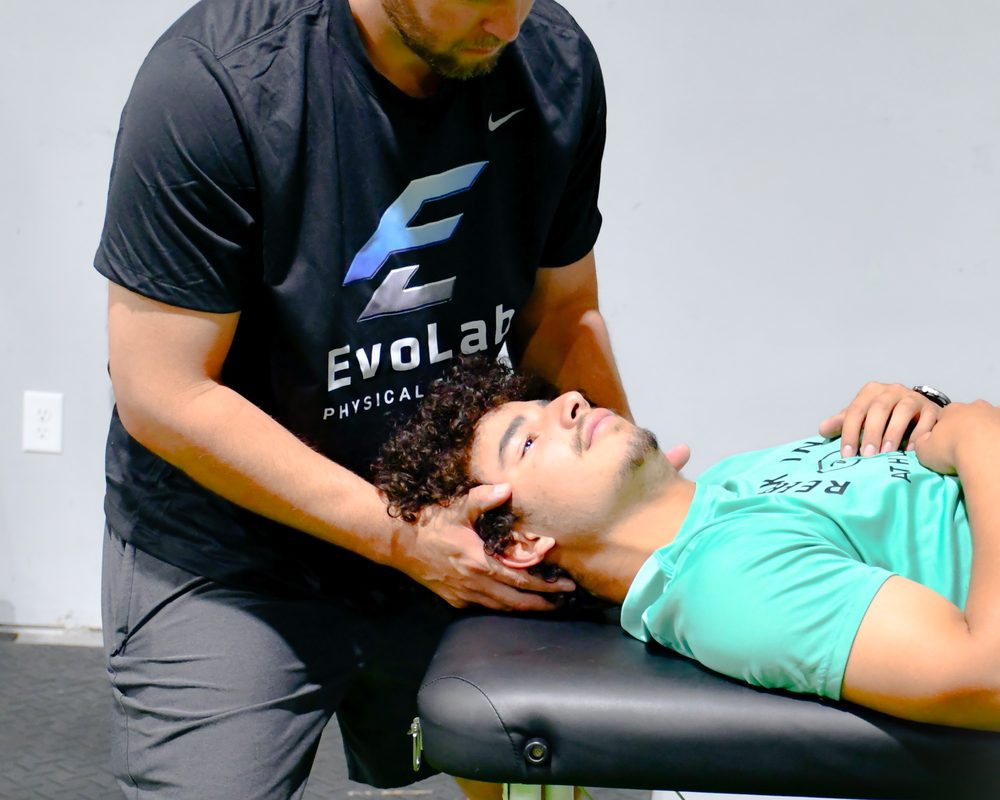
What is return-to-sport testing in Wilmington?
Return to sport is the finish line at the end of a plan, the point where you stop asking “does this feel okay?” and start proving it against numbers. Dr. Nathan Thompson built this standard around baseball and softball specifically, throwing progressions, hitting mechanics, hip and shoulder testing under fatigue, but it applies to any sport you’re working to get back to, soccer, basketball, running, or anything else that asks your body to move fast and unpredictably.
Clearance here means passing tests, not reaching a date on a calendar: strength ratios side to side, hop and landing tests, and sport-specific movement screens under the kind of fatigue your sport actually produces. If the numbers say not yet, it’s not yet.
What return-to-sport testing addresses.
Whatever the injury, and whatever the sport, the clearance approach is the same:
Baseball Rehab ⟶
Return-to-throw progressions for pitchers, catchers, and every position on the field.
02Softball Rehab ⟶
Return-to-pitch progressions built for the windmill motion specifically.
03Knee pain ⟶
ACL and MCL recovery, cleared by hop tests and strength ratios, not a date.
04Physical Therapy ⟶
The rehab work that leads up to the clearance testing on this page.
Return to play without passing the actual tests tends to end the same way: the same injury, usually further from the season than before. Passing standards beats guessing at when it feels ready.
Who this is for.
Anyone working back from an injury who wants proof, not a guess, that they’re ready. Baseball and softball athletes get the most specific version of this testing, but a soccer player rebuilding an ACL, a basketball player coming off an ankle sprain, or a runner returning after a stress fracture all go through the same clearance standard: tested under load and fatigue before anyone calls it done.
If you’d rather pass a real test than trust a calendar, you’re the right fit for this room, whatever sport brought you here.
“I tore my ACL playing rec league soccer and was terrified of doing it again. They didn’t clear me until I actually passed the hop tests, not just because six months had passed. I trust this knee now.”
Questions, answered plainly.
No. Baseball and softball are where Dr. Thompson has the deepest specific background, but the same clearance-testing approach applies to any sport: soccer, basketball, running, volleyball, whatever you’re working to get back to.
Strength ratios comparing the injured side to the healthy one, hop and landing tests, and movement screens under the kind of fatigue your sport actually produces, all built around what your specific sport demands rather than a generic checklist.
General physical therapy is often aimed at getting you out of pain and moving normally in daily life. Return-to-sport testing goes further: it tests whether you can handle the speed, load, and unpredictability of your actual sport, not just whether the pain is gone.
Then you keep working instead of getting cleared and hoping. You’ll know exactly which standard you missed and what it takes to close the gap, so the next attempt isn’t a guess either.
Start with the evaluation that sets your standards.
Put it in writing.
Five short questions. A real person calls you back, usually within two business hours, with times that fit your week.
The people who end up filling this out are rarely in the worst pain of their life. They’re just done working around it, done picking the errand that doesn’t require the stairs. If that’s the stage you’re at, this is the part where you stop researching and start.
Consider it filed.
A real person will call you back, usually within two business hours, with appointment times that fit your week. Keep your phone nearby.
Can’t wait? Call (910) 218-8108 ⟶Easy to find. Easy to park.
In the neighborhood, with parking by the door. Come see the place before you commit, if you like.
The clinic · EvoLab Physical Therapy
Get Directions ⟶Opens in Google Maps