
Wilmington, NC · Services
Performance training in Wilmington.
Screens, strength, and mobility programming built by a Doctor of Physical Therapy, aimed at the injury that hasn’t happened yet, not the one that already has.
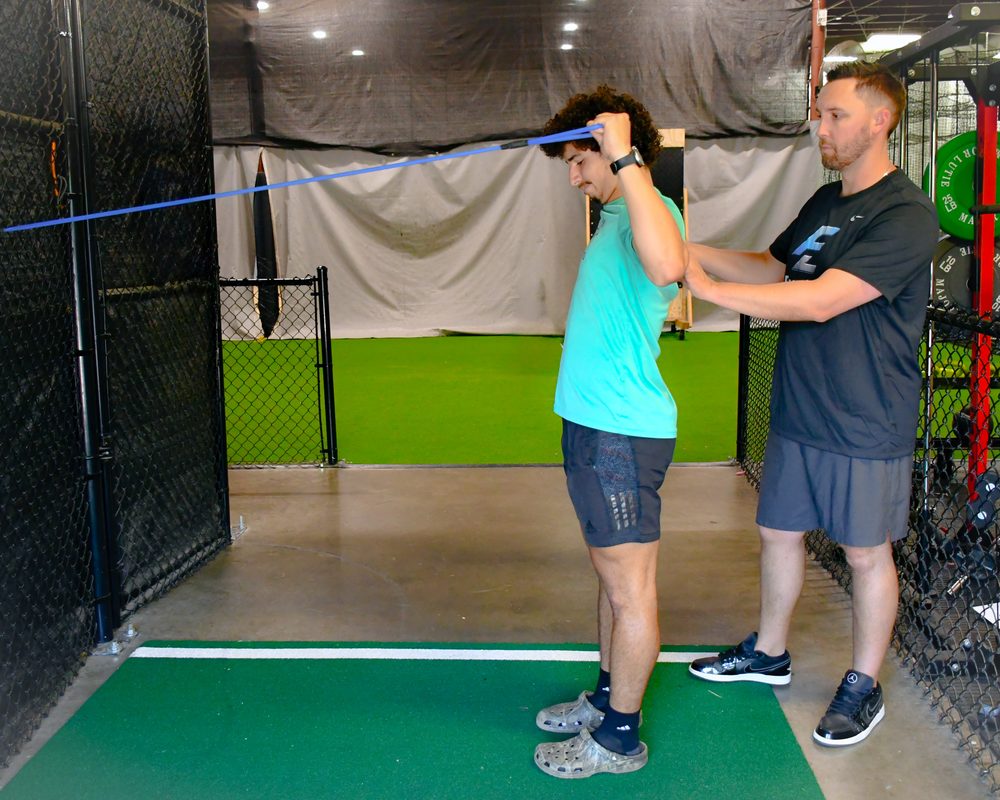
What is performance training in Wilmington?
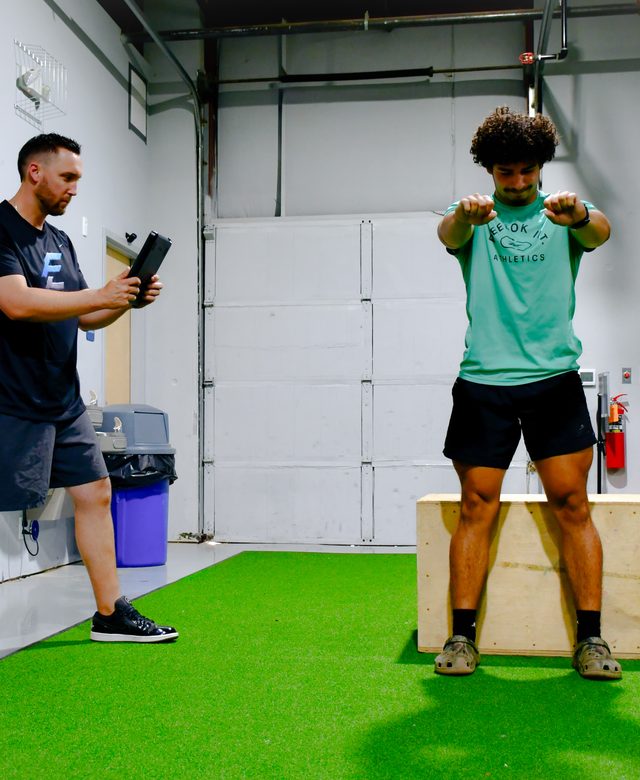
Performance training starts with a movement screen, not a workout: a cause-first look at how you squat, land, rotate, and load, to find the pattern likely to cause trouble before it does. That screen doubles as an extension of the four-phase framework everyone here trains through, Pain, Prime, Perform, and Prevent. Performance training picks up mostly in Prevent, for people who’ve already been cleared of pain and want the strength and movement standards that keep them there.
Programming is built and progressed by a Doctor of Physical Therapy, so a client rebuilding after a prior injury and a client who’s simply never been screened get different plans, not the same printed sheet. Sessions still run one-on-one, dosed to your body’s actual capacity, not to a generic template pulled off a shelf.
There’s no fixed finish line the way a rehab plan has an endpoint. Performance training tends to run in blocks, reassessed on a schedule, so the programming keeps answering to how your body is actually adapting.
What conditions does performance training help prevent or manage?
Performance training tends to get used by people managing a prior injury’s risk of returning, or by anyone whose movement screen flagged a pattern worth correcting before it becomes a problem. A sample of what it commonly supports:
Knee pain ⟶
Landing and cutting mechanics behind repeat ACL or MCL strain risk.
02Low back pain ⟶
The bracing and hip hinge patterns behind a back that flares under load.
03Shoulder pain ⟶
The scapular control and rotator cuff strength behind a shoulder prone to overhead strain.
04Foot & ankle pain ⟶
The balance and landing control behind an ankle that’s rolled more than once.
A movement pattern that’s never been screened tends to keep producing the same injury on a loop: the ankle that rolls every season, the back that flares every time the yard work piles up, each round arriving a little sooner than the last. Correcting the pattern, rather than just resting after the next flare, is usually what actually breaks the cycle.
What does a performance training session look like?
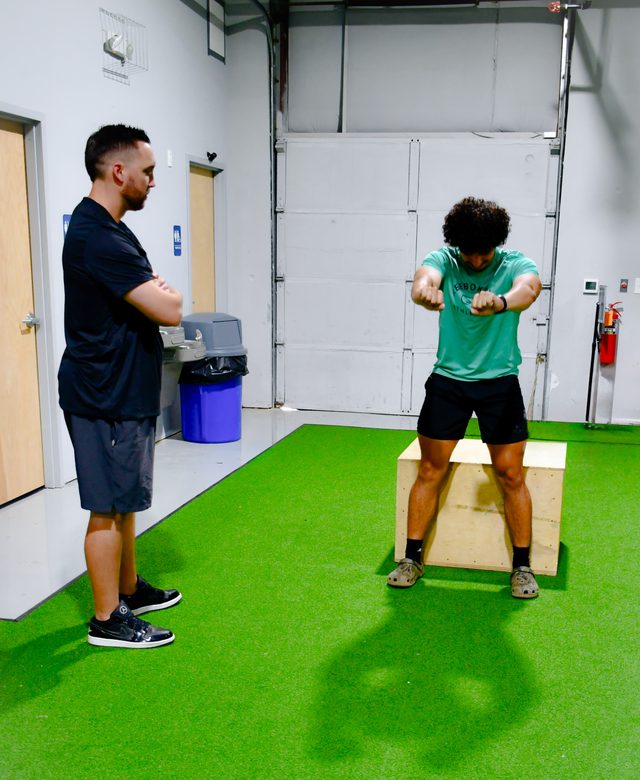
The first session is the screen: a series of movement tests, squat, hinge, single-leg balance, rotation under light load, scored against standards for your age and activity level, not a pass or fail guess. That screen sets the baseline everything after is built from.
Training sessions that follow mix strength work, mobility, and movement pattern correction, dosed to what the screen found and progressed as you clear each standard. Your Doctor of Physical Therapy adjusts the programming visit to visit, the same way a plan adjusts through Prime and Perform, except the goal here is staying ahead of an injury instead of recovering from one.
Who this is for, and who it isn’t.
Performance training tends to fit people who’ve already cleared a physical therapy or sports rehab plan and want to keep the gains, athletes heading into a season who’d rather screen for a weak link than find it mid-game, and anyone whose movement has quietly gotten sloppier than they’d like to admit. You don’t need a current injury to start; a clean screen is a good outcome, not a wasted appointment.
The people who choose a screen-first program over a generic gym routine are usually the same type: they think in terms of risk, not just results, and they’d rather correct a pattern on a Tuesday than explain an injury on a Saturday. If that’s you, the screen is worth the hour.
It’s not the right first stop for pain you’re currently in. That starts with a cause-first evaluation and a rehab plan, not a performance screen, so the pattern correction has something stable to build on. Once that plan reaches its endpoint, performance training is often the natural next step.
Good fit
- Cleared from a physical therapy or sports rehab plan
- Want to keep the gains and prevent reinjury
- Athlete heading into a season
- Movement screen flagged a risky pattern
Not the right first stop
- Pain you’re currently experiencing
- Undiagnosed movement problems
It’s a tool inside the plan, never the whole plan.
“I finished my knee rehab and didn’t want to just stop and hope. The performance screen found a landing pattern I didn’t know I had, and fixing it feels like actual insurance.”
Questions, answered plainly.
No. Performance training tends to fit anyone who wants a movement screen and a strength or mobility program built around what that screen finds, whether that’s a weekend athlete, someone returning to activity after time off, or someone who simply wants to move better before something forces the issue.
They’re related but not identical. A physical therapy evaluation is cause-first diagnostic work aimed at current pain. A movement screen looks at how you move under no current pain, squatting, landing, rotating, to flag a pattern that tends to cause trouble down the road, before it becomes an injury requiring an evaluation at all.
Programming typically runs in blocks, reassessed on a set schedule rather than against a fixed endpoint the way a rehab plan is. Your Doctor of Physical Therapy will lay out the expected length of your first block at the screen, based on what it finds and what you’re training toward.
Yes. A clean movement screen with nothing urgent to correct is a good outcome, not a wasted appointment. Many clients start performance training simply because they’d rather find and correct a risky pattern on their own schedule than wait for an injury to find it for them.
Start with the screen, not the guess.
Put it in writing.
Five short questions. A real person calls you back, usually within two business hours, with times that fit your week.
The people who end up filling this out are rarely in the worst pain of their life. They’re just done working around it, done picking the errand that doesn’t require the stairs. If that’s the stage you’re at, this is the part where you stop researching and start.
Consider it filed.
A real person will call you back, usually within two business hours, with appointment times that fit your week. Keep your phone nearby.
Can’t wait? Call (910) 218-8108 ⟶Easy to find. Easy to park.
In the neighborhood, with parking by the door. Come see the place before you commit, if you like.
The clinic · EvoLab Physical Therapy
Get Directions ⟶Opens in Google Maps