
Wilmington, NC · Services
Blood Flow Restriction training in Wilmington.
A way to keep building real strength while a joint or repaired tissue still isn’t ready for heavy load: a tool inside a cause-first plan with a Doctor of Physical Therapy, never a treatment on its own.
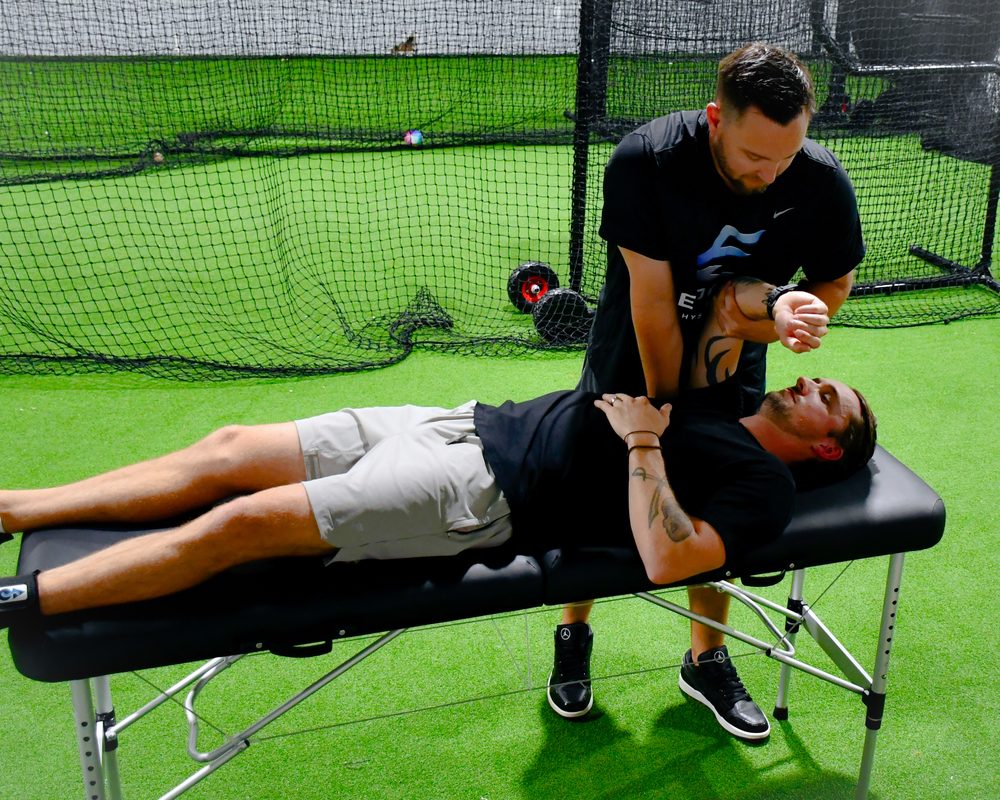
What is Blood Flow Restriction training in Wilmington?
Blood Flow Restriction, BFR, uses a calibrated pneumatic cuff placed on an arm or leg to partially restrict blood flow while you exercise with light weight. That restriction changes how the muscle responds, producing a strength and growth signal similar to heavy lifting, at a fraction of the load on the joint or tissue underneath.
That matters most in the early phases after surgery or a significant injury, when heavy load isn’t safe yet but muscle loss happens fast without some kind of training stimulus. Inside your plan, it usually shows up in Pain and Prime, keeping strength on board while the tissue that actually got hurt finishes healing, before the plan moves on to progressively heavier work in Perform.
Every session runs under a Doctor of Physical Therapy who sets the cuff pressure specifically to you and screens for the handful of conditions that rule it out, as one tool inside your broader plan, not a service you book on repeat instead of doing the rest of the work.
Calm it down.
Hands-on treatment begins at the first visit. You leave understanding what’s actually going on, and you feel a difference early.
Restore what’s stuck.
Targeted mobility work for the joints and tissue actually holding you back, dosed to your body, not a printed sheet.
Build strength you trust.
Progressive load against standards you have to clear before moving on. Confidence, here, is a training effect.
Make it stay fixed.
Testing before you’re cleared, then a keep-it-gone program sized to your real week. Then we graduate you.
What does BFR training support?
BFR tends to get called in wherever heavy load isn’t safe yet but muscle needs to stay on board. A sample of where it commonly fits:
Knee pain ⟶
Post-surgical knees where quad strength needs to hold on without heavy load early.
02Shoulder pain ⟶
A repaired shoulder or elbow that needs strength work while still protected.
03Hip pain ⟶
Hip and glute strength maintained through a phase where load has to stay light.
04Return to Sport ⟶
One of the more common places BFR shows up in a return-to-play timeline.
Muscle loss after surgery or a significant injury happens fast, often faster than the tissue heals. BFR is one of the few tools that keeps a real training stimulus in play during the window when heavy weight simply isn’t an option yet.
What does a BFR session look like?
BFR is scheduled as part of a regular visit, not a separate appointment. Your Doctor of Physical Therapy places a calibrated cuff on the target limb, sets the pressure specifically to you, and walks you through a set of light-load exercises, think a fraction of what you’d normally lift, for higher reps than usual.
Expect a deep muscle burn that sets in faster than the weight would suggest, and noticeable fatigue by the end of the set. The cuff comes off between exercises and at the end of the session, and most people are back to normal within a few minutes. The same visit typically continues into the rest of your plan while the training effect is still working.
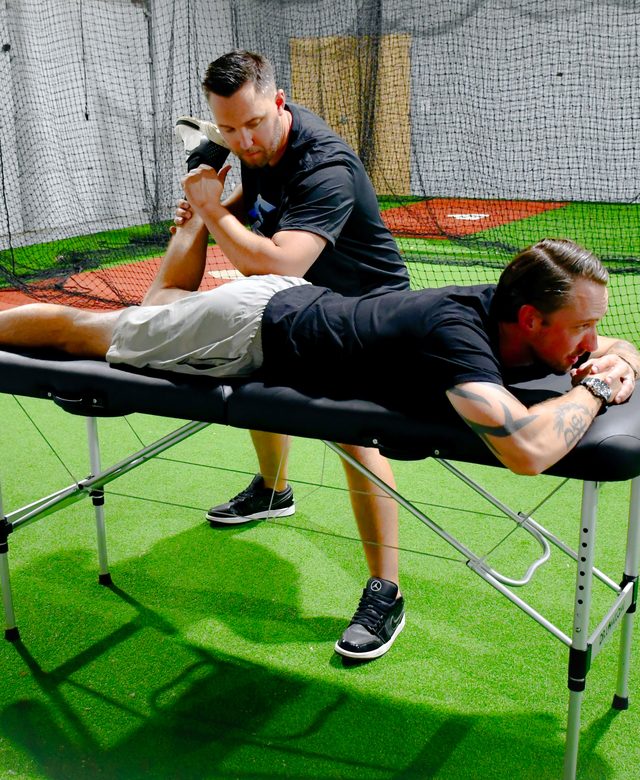
Who this is for, and who it isn’t.
BFR tends to fit patients recovering from surgery or a significant injury who need to keep building real strength without loading the healing tissue too early. It also fits athletes, baseball and softball players included, managing a joint that needs to stay strong while something else on the body finishes settling down.
It’s a tool your provider brings into an existing plan when the timeline calls for it, not something you book on its own without an evaluation first.
It’s not appropriate for patients with a history of blood clots, certain cardiovascular or vascular conditions, uncontrolled high blood pressure, or pregnancy, all of which your provider screens for before the cuff ever goes on. That screening happens at your evaluation, before anything is scheduled.
Good fit
- Post-surgical or post-injury tissue that can’t tolerate heavy load yet
- Athletes needing to maintain strength around a healing area
- Part of an existing plan, not a first appointment
- Cleared by your evaluation and screening first
Not the right fit
- History of blood clots or certain vascular conditions
- Uncontrolled high blood pressure
- Pregnancy (screened at evaluation)
Physical Therapy ⟶
The evaluation and plan it’s built to serve.
02Performance Training ⟶
Where the strength BFR protects gets built back to full load.
It’s a tool inside the plan, never a standalone treatment.
“After surgery I was terrified of losing everything I’d built. The cuff training let me actually feel like I was working out again, weeks before I could touch real weight.”
Questions, answered plainly.
Done with a calibrated cuff and a trained provider, yes, it’s a well-studied technique used widely in post-surgical rehab. Your Doctor of Physical Therapy screens for blood clot history, certain cardiovascular conditions, and other factors before ever applying the cuff, and cuff pressure is set specifically to you, not eyeballed.
It feels more like a demanding set of light-weight reps than pain: a deep muscle burn and fatigue that sets in faster than you’d expect from the weight on the bar. The cuff itself feels like firm pressure, not a tourniquet cutting off your limb. Most people tolerate it well once they know what to expect.
Because sometimes heavier isn’t an option yet, a joint or repaired tissue that can’t tolerate heavy load while it’s still healing. BFR uses the restricted blood flow to trigger a strength and muscle-building response similar to heavy lifting, using loads light enough to be safe for tissue that isn’t ready for the real thing.
Most often patients recovering from surgery or a significant injury who need to keep building strength without loading the healing tissue too early, along with athletes managing a joint that needs to stay strong while something else settles down. Your evaluation determines whether it fits your specific plan.
Start with the evaluation that builds the plan.
Put it in writing.
Five short questions. A real person calls you back, usually within two business hours, with times that fit your week.
The people who end up filling this out are rarely in the worst pain of their life. They’re just done working around it, done picking the errand that doesn’t require the stairs. If that’s the stage you’re at, this is the part where you stop researching and start.
Consider it filed.
A real person will call you back, usually within two business hours, with appointment times that fit your week. Keep your phone nearby.
Can’t wait? Call (910) 218-8108 ⟶Easy to find. Easy to park.
In the neighborhood, with parking by the door. Come see the place before you commit, if you like.
The clinic · EvoLab Physical Therapy
Get Directions ⟶Opens in Google Maps