
Wilmington, NC · Services
Injury prevention in Wilmington.
A movement screen aimed at the injury that hasn’t happened yet, built off your actual movement, not a generic sheet handed to everyone who walks in.
What is an injury prevention screen in Wilmington?
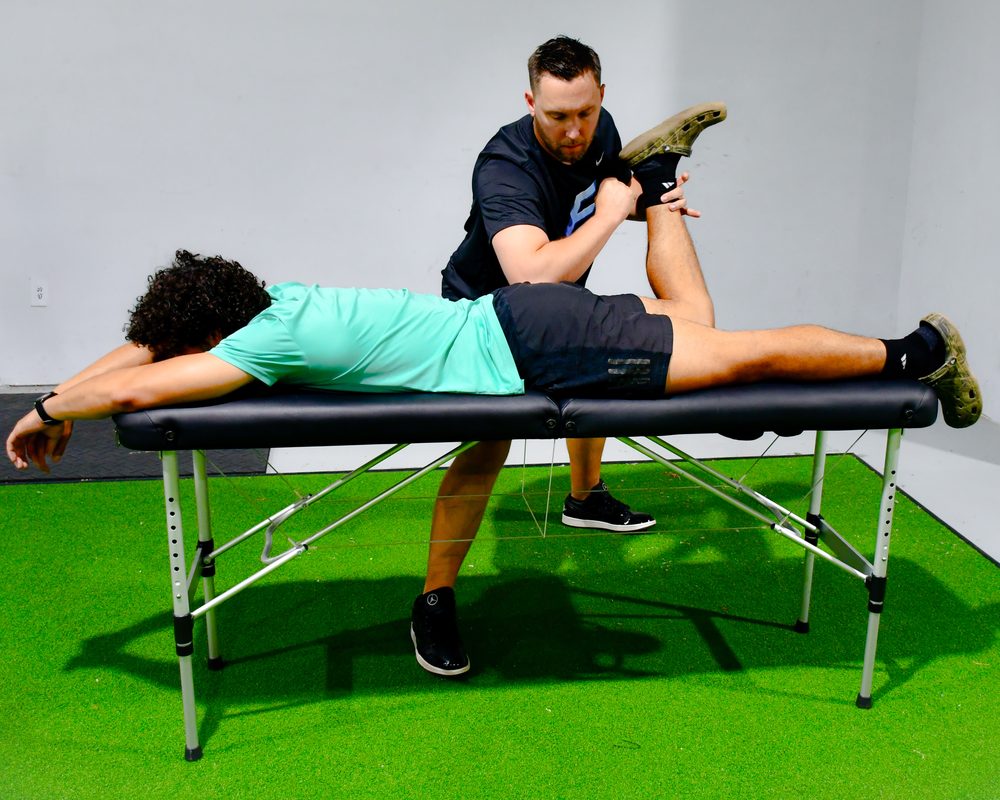
Most injuries don’t start the day they show up. A pattern builds quietly, a hip that doesn’t rotate quite enough, a knee that drifts inward under load, until repeated stress finally turns it into pain. A movement screen finds that pattern first: a hands-on assessment of how you squat, land, rotate, and load, run by a Doctor of Physical Therapy, not a generic intake questionnaire.
It’s useful for a thrower whose shoulder hasn’t hurt yet, a runner whose knee has started to feel unreliable on stairs, or anyone who’s simply done being surprised by their own body. If the screen finds something worth addressing, you move straight into a plan built around it, not a hallway referral somewhere else.
Who benefits from a movement screen.
A sample of who ends up finding this useful:
The throwing athlete ⟶
Baseball and softball players whose shoulder or elbow hasn’t hurt yet, and would like to keep it that way.
02The active adult ⟶
Anyone whose knee, hip, or back has started to feel unreliable under normal daily load.
03The returning trainee ⟶
Someone getting back into training after time off, before volume ramps up faster than the body’s ready for.
04Post-recovery ⟶
Anyone who finished a rehab plan and wants a check that the pattern that caused the original issue is actually gone.
Waiting for a pattern to become an injury tends to cost more time than screening for it up front. A screen is one visit. Rehab is a plan.
“Nothing hurt yet, I just wanted to know if there was anything worth fixing before the season started. The screen found a landing pattern I didn’t know I had, and we cleaned it up in a few weeks.”
Questions, answered plainly.
No, that’s the point. A movement screen looks at how you move under no current pain, squatting, landing, rotating, to flag a pattern that tends to cause trouble down the road, before it becomes an injury.
No. It fits a thrower with a shoulder that hasn’t hurt yet just as well as it fits someone whose knee has started to feel unreliable on stairs, or an active adult who wants to keep doing what they do without a setback. The screen is built around your actual movement, not your sport.
A hands-on assessment of how you squat, land, rotate, and load, looking for the pattern most likely to become a problem under repeated stress. You leave with specific findings, not a generic checklist everyone gets.
A Doctor of Physical Therapy runs it, using the same clinical eye applied to an actual injury evaluation, not a gym intake form. If something concerning turns up, you move straight into a plan instead of getting handed off elsewhere.
Start with the screen, before it becomes a problem.
Put it in writing.
Five short questions. A real person calls you back, usually within two business hours, with times that fit your week.
The people who end up filling this out are rarely in the worst pain of their life. They’re just done working around it, done picking the errand that doesn’t require the stairs. If that’s the stage you’re at, this is the part where you stop researching and start.
Consider it filed.
A real person will call you back, usually within two business hours, with appointment times that fit your week. Keep your phone nearby.
Can’t wait? Call (910) 218-8108 ⟶Easy to find. Easy to park.
In the neighborhood, with parking by the door. Come see the place before you commit, if you like.
The clinic · EvoLab Physical Therapy
Get Directions ⟶Opens in Google Maps