
Wilmington, NC · Services
Spinal manipulation in Wilmington.
A quick, targeted movement to restore motion in a spinal joint that’s stopped moving the way it should: a tool inside a cause-first plan with a Doctor of Physical Therapy, never a treatment on its own.
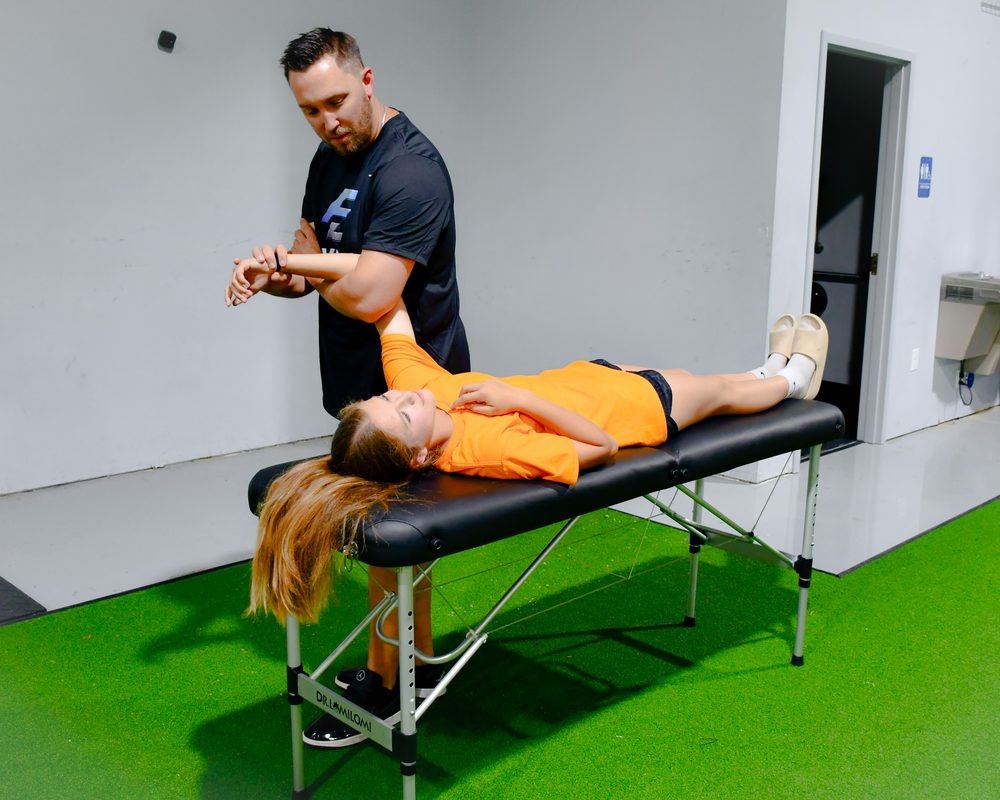
What is spinal manipulation in Wilmington?
Spinal manipulation is a quick, precisely targeted movement applied to a spinal joint that’s lost its normal range, meant to restore motion fast in a way that slower mobilization sometimes can’t reach on its own. It’s often accompanied by an audible pop, a gas bubble releasing inside the joint, which is normal and not a sign of anything being forced out of place.
Like every hands-on tool here, it shows up inside a cause-first evaluation and a plan built through the four named phases, Pain, Prime, Perform, and Prevent. It tends to earn its place in Pain and Prime, when a specific segment is restricted enough to be blocking the mobility and strength work that follows. Restoring the motion is the setup. Rebuilding control and strength around it is what actually keeps the restriction from returning.
Every session is performed by a Doctor of Physical Therapy trained in the technique, only after a thorough screening, as one tool inside your broader plan, not a service you book on repeat instead of doing the rest of the work.
Calm it down.
Hands-on treatment begins at the first visit. You leave understanding what’s actually going on, and you feel a difference early.
Restore what’s stuck.
Targeted mobility work for the joints and tissue actually holding you back, dosed to your body, not a printed sheet.
Build strength you trust.
Progressive load against standards you have to clear before moving on. Confidence, here, is a training effect.
Make it stay fixed.
Testing before you’re cleared, then a keep-it-gone program sized to your real week. Then we graduate you.
What conditions does spinal manipulation treat?
Spinal manipulation tends to get called in where a specific spinal segment has lost motion. A sample of what it commonly supports:
Low back pain ⟶
A restricted lumbar segment behind a stiff, guarded low back.
02Neck pain & headaches ⟶
A stiff upper neck segment contributing to headaches at the base of the skull.
03Shoulder pain ⟶
Restricted thoracic spine motion that limits full overhead reach.
04Hip pain ⟶
A restricted low back segment referring pain into the hip.
A joint that’s stopped moving properly tends to make the joints around it work harder to compensate. Restoring motion at the actual restriction, inside the plan that treats the underlying cause, is usually faster than waiting for it to loosen on its own.
What does a spinal manipulation session look like?
Spinal manipulation is scheduled as part of a regular visit, not a separate appointment. Your Doctor of Physical Therapy identifies the restricted segment through hands-on assessment, positions you for the specific movement, and applies a quick, targeted motion to that joint, often producing an audible pop as the joint releases.
Most patients feel immediate looseness in the area, sometimes right away, sometimes building over the next day. The same visit typically continues into mobility or strength work while the joint is primed to move, because restoring motion is meant to open a window, not close the file.
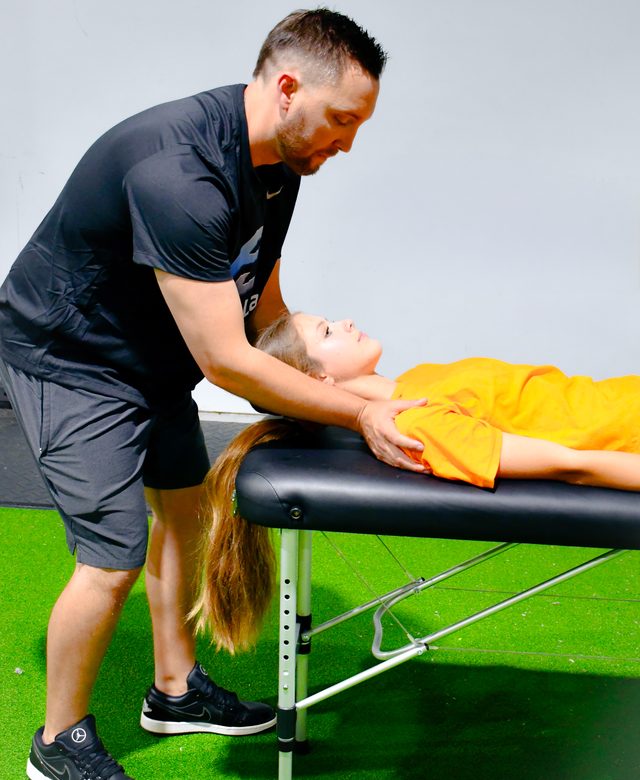
Who this is for, and who it isn’t.
Spinal manipulation tends to fit patients whose evaluation finds a specific joint restriction, a segment that’s stopped moving the way its neighbors do, contributing to stiffness or pain that slower mobilization alone hasn’t resolved. It’s most useful as an accelerant inside an existing plan, not as a first appointment on its own.
People who’ve had a manipulation work for them before, or heard the technique described and want to know if it fits, should raise it at their evaluation. Whether it’s appropriate depends entirely on what your specific spine shows that day.
It’s not appropriate for patients with certain spinal conditions, fractures, severe osteoporosis, specific vascular risk factors, or other red flags your provider screens for through a thorough evaluation before ever considering it. That screening happens first, every time, before anything is scheduled.
Good fit
- A specific spinal joint restriction found at evaluation
- Stiffness that hasn’t resolved with slower mobilization alone
- Part of an existing plan, not a first appointment
- Cleared by a thorough evaluation first
Not the right fit
- Certain spinal conditions or fractures
- Severe osteoporosis
- Specific vascular risk factors (screened at evaluation)
Physical Therapy ⟶
The evaluation and plan it’s built to serve.
02Performance Training ⟶
Where restored joint motion gets built into lasting strength and control.
It’s a tool inside the plan, never a standalone treatment.
“My low back had felt locked up for weeks and stretching wasn’t touching it. One targeted adjustment inside my regular session and I could bend forward again without bracing for it.”
Questions, answered plainly.
The technique itself, a quick, targeted movement to a joint that’s lost normal motion, is similar to what a chiropractor performs. The difference here is context: it’s one tool inside a cause-first physical therapy evaluation and plan, chosen only when the evaluation shows a specific joint restriction it would help, not a standing weekly visit.
The movement itself is quick and usually not painful, sometimes accompanied by an audible pop, which is a gas bubble releasing inside the joint, not bone grinding on bone. Some patients feel immediate looseness, others need a session or two before joint motion visibly changes. Mild soreness afterward is possible and usually settles within a day.
Performed by a trained Doctor of Physical Therapy after a thorough evaluation, yes, for the right candidate. Your provider screens for red flags, certain spinal conditions, fractures, and specific medical history, before ever considering it, and it’s never applied without that screening first.
Here, no, it’s not a maintenance visit you book indefinitely. It’s used when a specific joint restriction calls for it, paired with the mobility and strength work that addresses why the joint stiffened in the first place, and it stops being part of your plan once that’s handled.
Start with the evaluation that finds the restriction.
Put it in writing.
Five short questions. A real person calls you back, usually within two business hours, with times that fit your week.
The people who end up filling this out are rarely in the worst pain of their life. They’re just done working around it, done picking the errand that doesn’t require the stairs. If that’s the stage you’re at, this is the part where you stop researching and start.
Consider it filed.
A real person will call you back, usually within two business hours, with appointment times that fit your week. Keep your phone nearby.
Can’t wait? Call (910) 218-8108 ⟶Easy to find. Easy to park.
In the neighborhood, with parking by the door. Come see the place before you commit, if you like.
The clinic · EvoLab Physical Therapy
Get Directions ⟶Opens in Google Maps